

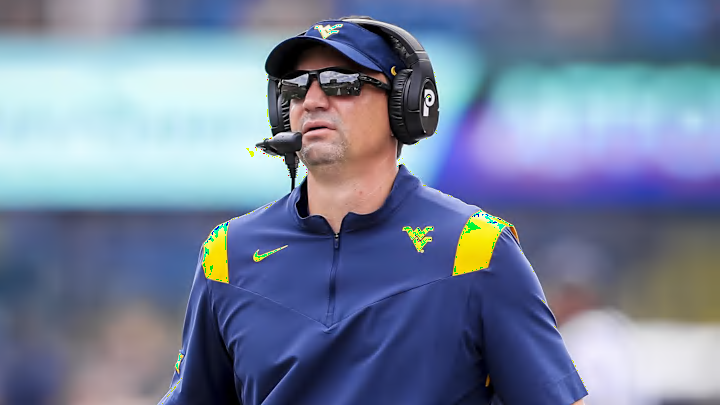
Neal Brown's tenure with the West Virginia Mountaineers didn't end as he had likely hoped, but it was a worthwhile experience in his coaching journey nonetheless.
Brown finished a mediocre six-season stint with the Mountaineers with a 37-35 overall record, and was fired by the school following the conclusion of the 2024 season. He then spent the past season as an assistant on Steve Sarkisian's staff at Texas before landing with North Texas for his third career head coaching opportunity.
Recently, Brown took the time to discuss exactly what his time with the Mountaineers (as well as last season's intereggnum with the Longhorns) has taught him about coaching at the highest levels of the sport, and what he'll take from those lessons moving forward.
How did his WVU football tenure change Neal Brown as a football coach?
WVU was just Brown's second head coaching, after he had a rather successful stint with the Troy Trojans. It was also his first-ever Power 4 head coaching job, and came at a time where the college sports world was being rocked by COVID, NIL, and the transfer portal – none of which affected his time at Troy.
And in a recent interview with Dave Campbell's Texas Football, Brown gave his thoughts on his time with the Mountaineers, and some missteps he may have made along the way in his approach to the job.
"It wasn't that we necessarily failed. We were okay. We just never got over the hump," Brown said. "At the start of my tenure, I treated the West Virginia job just like Troy. And what I mean by that is, I was really involved in everything."
"There are two issues with that. One, the job was bigger so you have more responsibility. Two, my life was evolving and my kids were getting older and that was my first priority. And so, as a father, I couldn't do all those things."
Now, after the end of his stint at West Virginia and what he called the "halftime" of his career at Texas last season, he feels like he has a new perspective on coaching at the collegiate level. Now, he tries to put what he calls "blind trust" in the assistants and staffers he hires, and doesn't attempt to micromanage things as much. He describes it as a "freeing" feeling.
"It really helped me take a breath," Brown said of the past year of his life. "Now, for this job, I'm ready to go and I have a new perspective. I'm seeing it through the players' eyes. I'm seeing it through the assistant's eyes. And maybe I didn't at the end of my tenure at West Virginia."
 Add us as a preferred source on Google