

On Friday, US president Donald Trumpsigned an executive orderregarding NIL and eligibility for college athletics set t go into effect on August 1.
The move came after much speculation and debate in recent months on whether or not the government would weigh in on the topic which has completely changed the college sports world in recent years. And now that the President has put pen to paper on an executive order, we can examine what it means for college sports – and it lines up quite well with recent comments from WVU football head coach Rich Rodriguez on changes he'd like to see be made.
President Donald Trump signed an executive order Friday designed to limit how long athletes can play college sports and how often they can transfer between schools.
— Adam Schefter (@AdamSchefter)April 3, 2026
More via ESPN’s Dan Murphy:https://t.co/DUaa0Cw6eR
Donald Trump signes executive order for 5-year eligibility window and 1 transfer
In Trump's new executive order, the NCAAhas been directedto create rules mandating that athletes play for "no more than a five-year period" and allowing just one chance at transferring before graduation without sitting out a full season. The order also threatens to pull funding for any school who pays an athlete who does not meet these requirements.
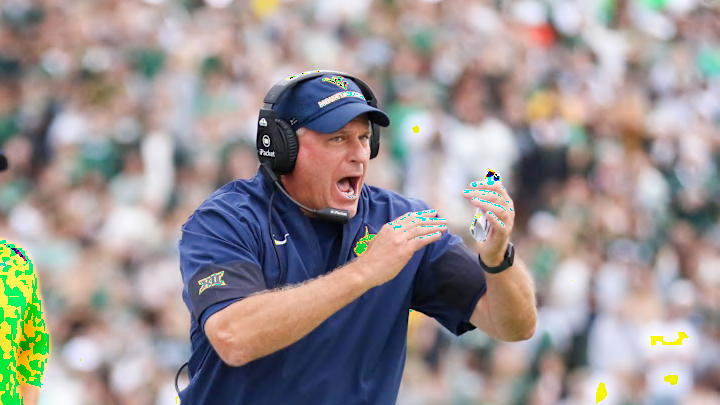
This is pretty much in alignment with the exact wishes ofWest Virginia head coach Rich Rodriguez, who was asked during a press conference last week about his thoughts on eligibility for athletes and changes that should be made.
"I don't mind saying it,"Rodriguez said. "Five years of eligibility. Five to play five. That’s it. You transfer one time, not have to sit out. After that, you've got to sit out.”
Here’s what WVU Rich Rodriguez said last week about eligibility rules:
— Spencer Ripchik (@RipchikSpencer)April 3, 2026
“I don't mind saying it. Five years of eligibility. Five to play five. That’s it. You transfer one time, not have to sit out. After that, you've got to sit out.”https://t.co/K4sTcvpl1f
Of course, it is unlikely this executive order provides the easy fix that Trump and others supporting the move may think it will. Trump's order basically directs the NCAA to defy multiple court rulings, and it legal action will likely be taken against this executive order in the same spirit, particularly if the administration follows through on pulling federal funding to schools over the matter.
Hugely ironic,"said House plaintiff attorney Steve Berman on Friday."We brought the House case basically to challenge the rule set by a bunch of old White men at the expense of college athletes. Now, a bunch of people who think they know better have gotten in a room to try once again to fix the rules of college athletics, and refused to let the market do so. This is really an affront to the Sherman Act and to the rights of college athletes all across the nation.
 Add us as a preferred source onGoogle
Loading recommendations... Please wait while we load personalized content recommendations